
Interpretive era · Early lights
Fire, oil, and vigilant hands
The earliest coastal lights depended on fuel, clear lenses, and nightly attention from keepers who read weather as carefully as charts.
Record type: Working methods
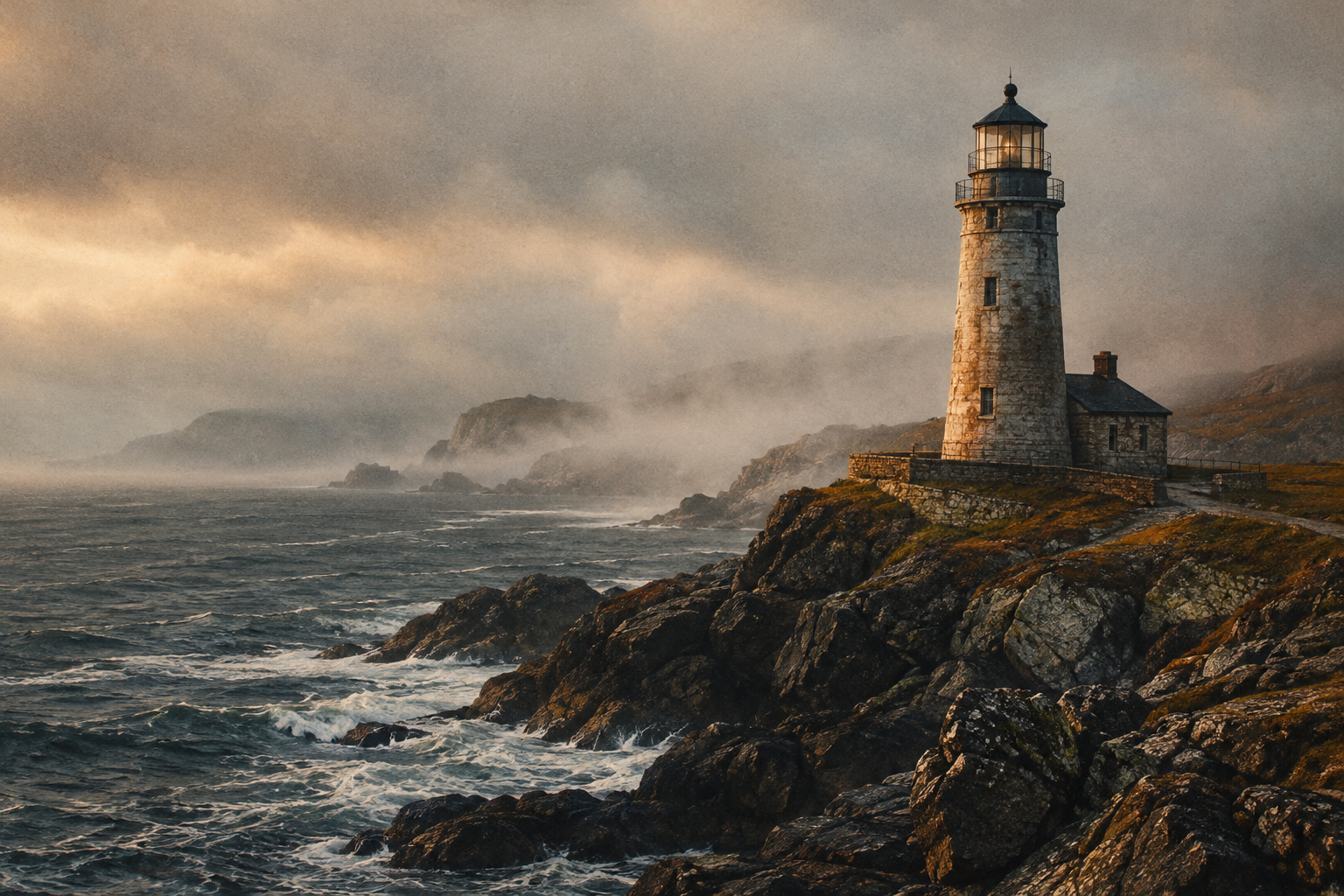
Folio I · Northern Coast Record
Explore archival photographs, keeper recollections, and preservation context from the northern coast’s enduring lights.
Coastal history sequence
This overview groups archival records into broad interpretive eras so visitors can track changing lighthouse labor, materials, and navigation practice without overstating single-site certainty.
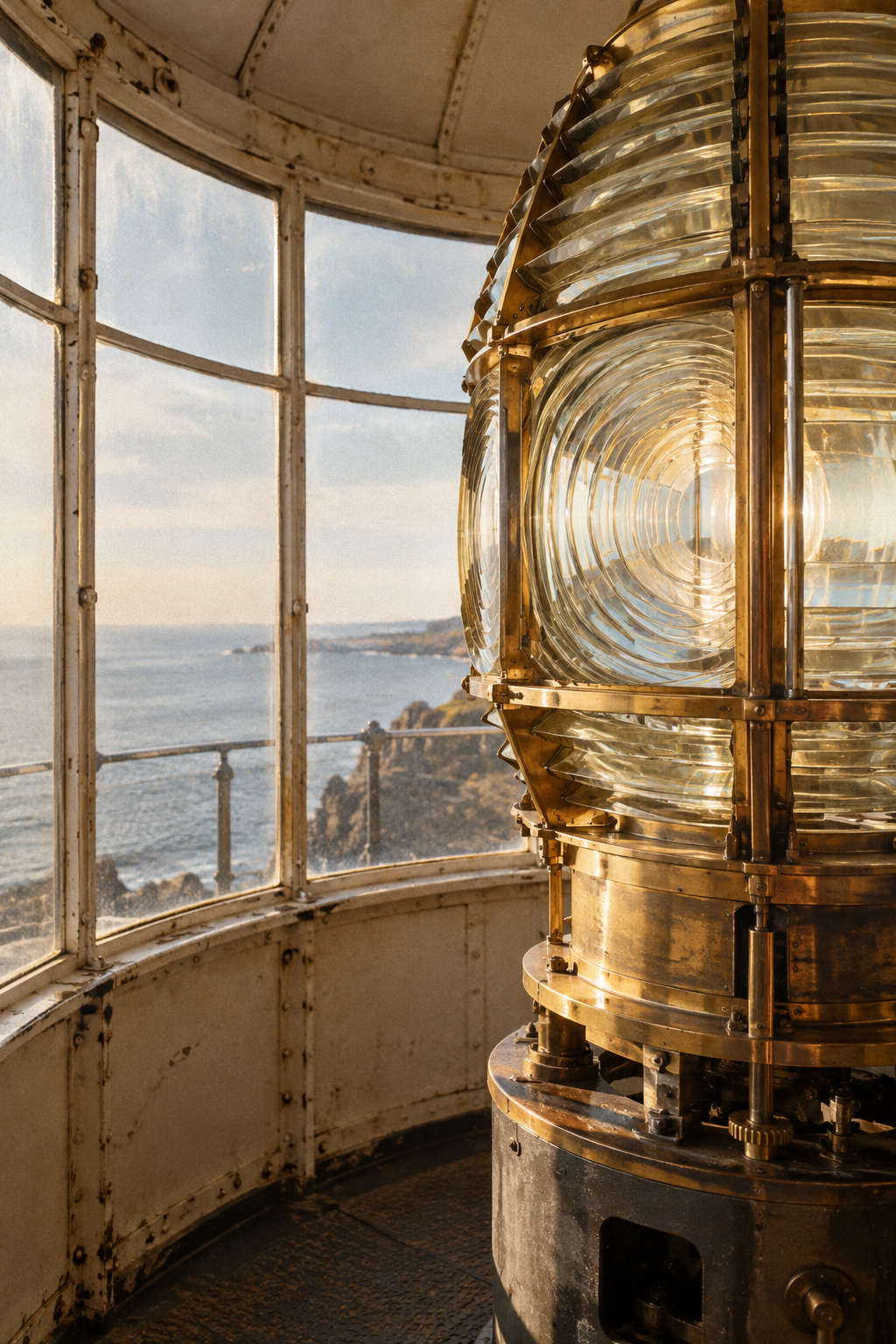
Interpretive era · Early lights
The earliest coastal lights depended on fuel, clear lenses, and nightly attention from keepers who read weather as carefully as charts.
Record type: Working methods
Interpretive era · Optical change
Improved optics concentrated modest flames into recognizable beams, giving each station a more distinct presence along the coast.
Record type: Technology
Interpretive era · Mechanization
Clockworks, engines, and electric lamps gradually changed the rhythm of the watch while towers remained fixed points in a changing system.
Record type: Operations
Interpretive era · Preservation
Preserved towers, photographs, logs, and oral histories now hold different parts of the story and require careful interpretation together.
Record type: Legacy
Keeper Stories
Interpretive vignettes grounded in records, revealing daily labor, domestic routine, and duty at the northern coast lights.
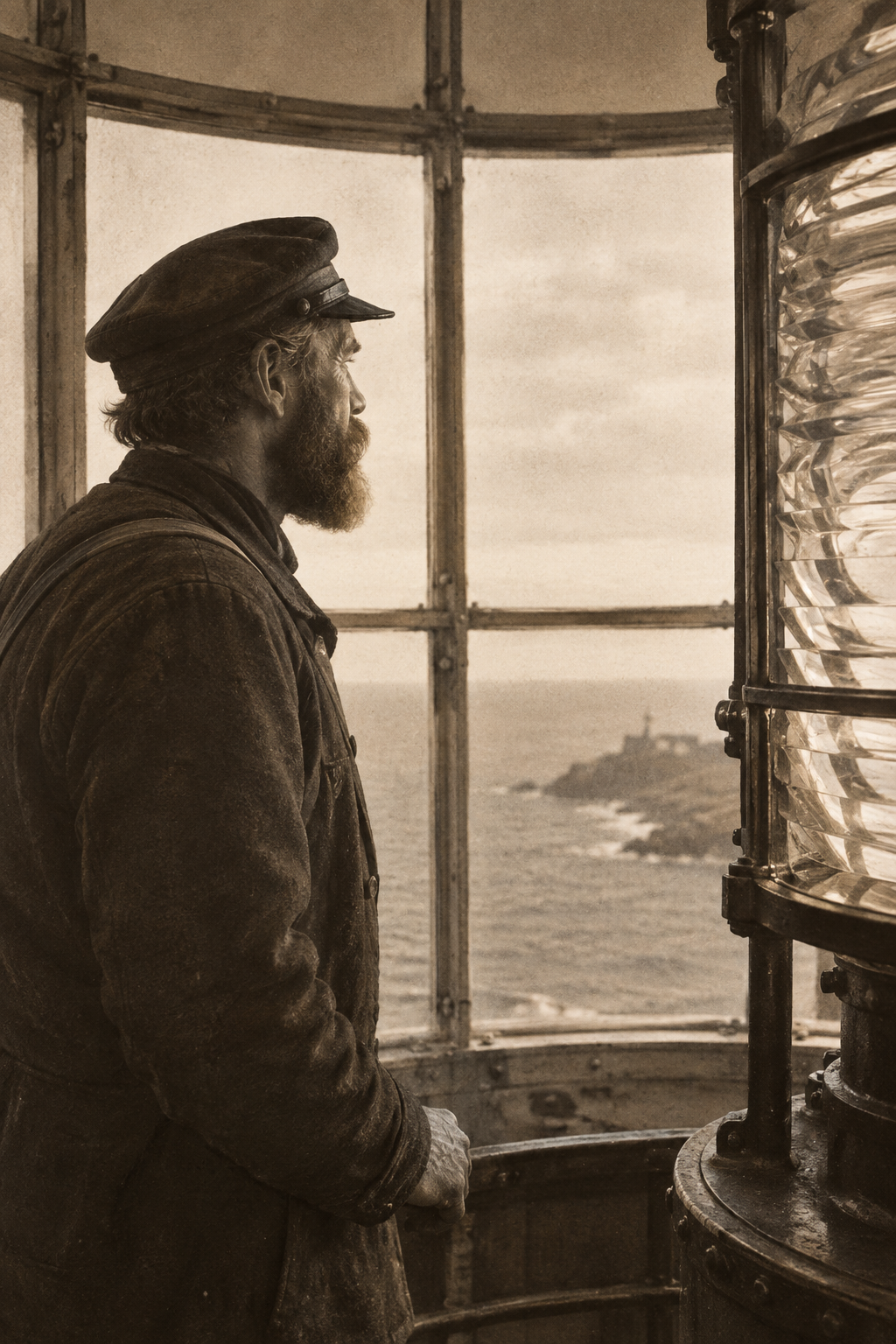
Elias Ward
An interpretive vignette about listening for changes in wind and surf while tending the lamp through a long northern night.
Archive disclaimer
Story vignette inspired by common keeper duties; not a direct quotation.
Interpretive vignette; not a direct quotation from archival records.
Mara Bell
An interpretive vignette about household routines, supply days, and the constant boundary between family life and station work.
Archive disclaimer
Story vignette inspired by recurring themes in keeper histories; not a direct quotation.
Interpretive vignette; not a direct quotation from archival records.
Thomas Reed
An interpretive vignette about learning new equipment while preserving the habits of observation that had guided earlier watches.
Archive disclaimer
Story vignette inspired by technological change at lighthouse stations; not a direct quotation.
Interpretive vignette; not a direct quotation from archival records.
Preserved Towers
This illustrated directory connects surviving lighthouse records to place, showing where preservation memory remains visible along the northern coast.
Illustrative map — not to scale.
Archive reading guide
Each source type adds evidence from a different angle, and careful cross-reading keeps the historical record accurate.
Study architecture, working conditions, weather, and changes to station buildings.
Reading note:Check captions, dates, photographers, and whether later prints altered the original view.
Trace daily operations, maintenance, weather observations, and changes in equipment.
Reading note:Read entries in sequence and distinguish routine notation from exceptional events.
Understand memory, family life, isolation, skill, and the social meaning of station work.
Reading note:Treat recollection as a personal account shaped by time and perspective.
Follow alterations, ownership, restoration work, and the condition of surviving structures.
Reading note:Confirm that the record applies to the same tower, date range, and structure phase.
Credit photographs and records to their holding collections whenever known.
Return to top